
Sacral chakra meditation feel, create & flow
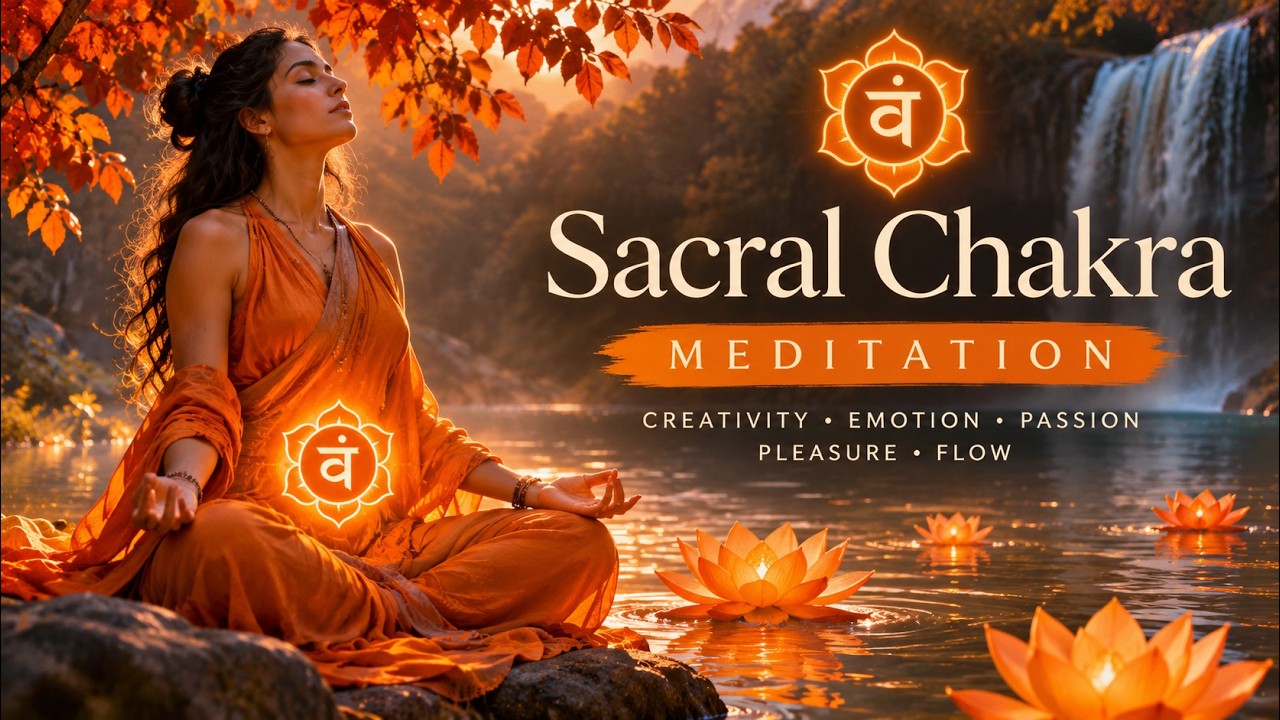
Emotions are not a problem to fix; they are a current to move with. This free 18-minute guided sacral chakra meditation invites you to picture warm, radiant orange energy around your lower abdomen and to reconnect with your emotions, creativity and sense of joy. Watch below, then explore what the Svadhisthana chakra is and how to work with it every day.
Watch: Sacral Chakra Meditation 🧡
Find a quiet, comfortable place and use headphones if you can. Rest a hand on your lower belly, close your eyes and let the meditation guide you without judgment.
In this meditation you will
- Connect with your sacral chakra (Svadhisthana)
- Explore emotional awareness and acceptance
- Awaken creativity and inspiration
- Release emotional tension through mindful breathing
- Cultivate joy, passion and a sense of inner flow
- Reconnect with your authentic self
What is the sacral chakra (Svadhisthana)?
The centre of emotion, creativity and flow, and of feeling at home in your own feelings.
In yogic and tantric tradition the body is described as having seven main energy centres, or chakras, from the base of the spine to the crown of the head. The second is Svadhisthana, often translated as "one's own dwelling" or "the seat of the self" (sva, "one's own", plus adhisthana, "dwelling" or "base"). It is traditionally pictured as an orange, six-petalled lotus holding a crescent moon, the symbol of the water element.
Where the root chakra is about safety and stability, the sacral chakra is about movement: emotions, creativity, pleasure, passion, intimacy and our ability to adapt and change. Like water, it is at its best when it can flow, neither dammed up nor flooding. That is why this meditation uses the image of a warm orange glow and a gentle, wave-like breath.
A note on evidence: chakras are a spiritual and cultural framework, not anatomical structures recognised by medicine. What modern research does support is that the tools used in this meditation (slow breathing, body awareness, mindfulness and self-compassion) can help people manage stress and relate to their feelings more kindly. You do not need to hold any particular belief to benefit.
Root chakra vs sacral chakra
Many teachers work from the ground up: first feel safe, then feel freely. Here is how the first two chakras compare.
| Feature | Root chakra | Sacral chakra |
|---|---|---|
| Sanskrit name | Muladhara | Svadhisthana |
| Colour & element | Red · Earth | Orange · Water |
| Seed sound | LAM | VAM |
| Location | Base of the spine | Lower abdomen, below the navel |
| Core themes | Safety, stability, belonging | Emotions, creativity, pleasure, flow |
| Feels like | Grounded and supported | Fluid, expressive and alive |
| Guided meditation | Root chakra healing meditation | You are here ↑ |
Where to begin? If you feel scattered or unsafe, start with our root chakra healing meditation for grounding, then come back here. If you feel steady but flat, numb or uninspired, the sacral chakra is a lovely place to begin.
Signs of a balanced vs blocked sacral chakra
How the tradition describes the sacral chakra in and out of balance. Notice which feels familiar right now.
🌊 When it flows
- You can feel your emotions without being swept away
- Ideas, play and creativity come naturally
- You enjoy simple pleasures without guilt
- You adapt to change with curiosity, not dread
- Close relationships feel warm, honest and balanced
🪨 When it feels blocked
- Feeling emotionally numb, flat or, at the other extreme, overwhelmed
- Creative blocks and a lack of inspiration
- Guilt or discomfort around pleasure and rest
- Resistance to change, or feeling stuck in a rut
- Difficulty with boundaries or closeness in relationships
- Tightness in the lower back and hips
Please note: these are traditional descriptions, not a diagnosis. If low mood, anxiety, difficult memories or pain persist, please speak to a doctor, therapist or mental health professional.
Benefits of sacral chakra meditation
Turning your attention to the lower belly, and to how you feel, can be surprisingly nourishing. Here is what many people notice.
Emotional awareness
Naming and noticing feelings, without judging them, is a first step toward handling them with more ease.
Release tension
Slow breathing into the lower belly encourages the body's relaxation response and softens held tension in the belly, back and hips.
Creativity and inspiration
A relaxed, playful state of mind is where ideas tend to appear. Meditation makes space for it, whether you write, paint, cook or code.
Joy and self-acceptance
Affirmations like "I deserve joy, love and happiness" build a kinder inner voice and permission to enjoy life.
Comfort with change
Imagining your energy as flowing water is a gentle way to practise letting go of control and welcoming what comes next.
Authentic connection
Knowing what you feel and need makes it easier to set kind boundaries and to connect honestly with others.
A gentle sacral check-in
There are no right answers and nothing is stored. Tick anything that feels true for you lately.
Just for reflection: this check-in is not a test or a diagnosis. It is a prompt to notice how you are, and to choose a kind next step.
How to heal the sacral chakra: 6 gentle techniques
Use them before or after the video, or on their own whenever you want to reconnect with your feelings and your flow.
-
Wave breathing
Breathe the way the sea moves: a slow rise, then a longer release. It is the heart of the guided meditation's calm pace.
How to: Rest a hand on your lower belly. Inhale through your nose for 4 as it rises like a wave; exhale for 6 as it flows back. Repeat for 2–3 minutes, or try the guided wave breathing below.
-
Warm orange light visualisation
Colour is the sacral chakra's traditional language, and warm, radiant orange is the image you will meet in the video.
How to: Picture a soft orange glow a few finger-widths below your navel. With each breath, let it grow a little warmer and gently wider, like sunlight on water.
-
Chanting the VAM seed sound
Each chakra has a traditional bija (seed) mantra. Humming VAM creates a soft vibration low in the body and naturally lengthens your exhale.
How to: Inhale deeply, then chant a long "Vahhhm" on the exhale, letting the "m" hum in your belly. Repeat 7 to 21 times.
-
Hip circles and pelvic sway
The sacral area loves gentle, fluid movement. Small circles release stiffness and bring your attention into your pelvis.
How to: Stand with feet wider than your hips, hands on your hips, knees soft. Draw slow circles, 5 in each direction, breathing steadily. Keep it comfortable and pain-free.
-
Five minutes of creative play
Creativity does not have to be good to be nourishing. Play is how the sacral chakra says thank you.
How to: Set a timer for 5 minutes and free-write, doodle, hum, dance or rearrange a shelf. No editing and no audience. Stop when the timer ends.
-
A mindful water ritual
Water is this chakra's element, so meeting it with attention is a simple, sensory practice.
How to: Take a warm shower or bath, drink a glass of water slowly, or sit near a river, lake or sea. Imagine tension rinsing away with each exhale.
Two minutes of wave breathing
Follow the glowing circle. Breathe in as it swells like a wave, then breathe out slowly as it settles. Five rounds is all it takes.
Press start when you are ready
Sacral chakra affirmations for joy & creativity
Repeat one silently on each exhale, or say them aloud at the end of your meditation with a hand on your lower belly.
"I embrace my emotions without judgment."
"I am creative, passionate and inspired."
"I deserve joy, love and happiness."
"I allow life to flow naturally."
"I welcome positive changes into my life."
"I give myself permission to feel, to play and to create."
Sacral chakra journaling prompts
Take five minutes with a pen. Write whatever comes, without correcting it.
Yoga poses for the sacral chakra
Hip-opening and gently flowing poses are traditionally used to support Svadhisthana. Hold each for 5 slow breaths, and move only within a comfortable range.
Goddess Pose (Utkata Konasana)
A wide, soft squat with arms bent like a cactus. It opens the hips and inner thighs and builds a feeling of grounded power.
Bound Angle (Baddha Konasana)
Sit with the soles of your feet together and let the knees fall open. Sit on a folded blanket if your hips are tight.
Pigeon Pose (Eka Pada Rajakapotasana)
A deep hip release often tied to stored emotion. A reclined or supported version is kinder to the knees.
Cat-Cow with hip circles
On hands and knees, flow between arching and rounding, then draw slow circles with your hips like water in a bowl.
Happy Baby (Ananda Balasana)
Lie on your back, hold your feet and rock gently side to side. A playful, soothing stretch for the lower back and hips.
Garland Pose (Malasana)
A deep squat that opens the pelvis. Support your heels or sit on a block if it feels strong.
New to yoga? Our guide to yoga for beginners covers Cat-Cow and other foundations step by step. If you have knee, hip or back concerns, check with a professional first and use props.
A simple daily sacral chakra routine
About 25 minutes in total. Consistency matters more than length, so shorten any step on busy days.
- 1
Move (4 min)
Hip circles, then Cat-Cow with slow hip sways, breathing into the lower belly and letting the movement stay soft.
- 2
Meditate (18 min)
Sit or lie down comfortably and follow the guided sacral chakra meditation above, letting the orange glow and your breath lead.
- 3
Reflect (3 min)
Write one journaling prompt, or place a hand on your belly and repeat "I embrace my emotions without judgment."
Continue your 7 chakra journey
The chakras are traditionally worked through from the base of the spine up to the crown. You are on number two.


More chakra meditations are on the way. Subscribe on YouTube to be first to hear when the crown chakra lands.
Sacral chakra meditation: your questions answered
What is the sacral chakra?
In yogic and tantric tradition, the sacral chakra, or Svadhisthana, is the second of the seven main chakras. It is described as sitting in the lower abdomen, just below the navel, and is associated with the colour orange, the water element and the seed sound VAM. It is linked with emotions, creativity, pleasure, relationships and the ability to embrace change.
Where is the sacral chakra located?
Traditionally the sacral chakra is placed in the lower abdomen, a few finger-widths below the navel, in the area of the sacrum and pelvis. In meditation you simply bring your attention, and perhaps a hand, to your lower belly and imagine a warm orange glow there.
What are the signs of a blocked sacral chakra?
Traditional teachings associate an unbalanced sacral chakra with feeling emotionally numb or overwhelmed, creative blocks, guilt around pleasure, fear of change, difficulty with boundaries or closeness in relationships, and tension in the lower back and hips. These descriptions come from spiritual tradition rather than medical diagnosis; persistent low mood, anxiety or pain should always be discussed with a doctor or therapist.
How do you unblock or heal the sacral chakra?
Common practices include guided sacral chakra meditation, slow wave-like belly breathing, visualising warm orange light in the lower abdomen, chanting the seed sound VAM, gentle hip-opening yoga such as Goddess Pose and Bound Angle Pose, creative play, journaling, spending time near water and repeating affirmations such as 'I embrace my emotions without judgment'.
What are the sacral chakra's colour, element and mantra?
The sacral chakra is traditionally orange (sometimes described as vermilion), its element is water and its seed mantra, or bija, is VAM. It is pictured as a six-petalled lotus containing a crescent moon.
How long should I do sacral chakra meditation?
Start with the 18-minute guided session, then practise for 10 to 20 minutes a few times a week, or shorter sessions daily. Regular short practice usually feels more settling than occasional long sessions. Many people enjoy it in the evening, when there is space to feel and reflect.
Should I start with the root chakra before the sacral chakra?
Many teachers suggest working from the base upwards, because feeling safe and grounded (the root chakra) makes it easier to feel and express emotions (the sacral chakra). It is not a rule, though. If you are drawn to the sacral chakra now, go ahead, and consider adding our root chakra meditation beforehand.
Can sacral chakra meditation bring up emotions?
It can. Turning attention inward sometimes surfaces feelings or memories. Go gently, keep your eyes open or stop whenever you need to, and do not force anything. If difficult emotions or trauma feel overwhelming, please speak to a doctor, therapist or mental health professional.
Is there scientific evidence for chakras?
Chakras are a traditional spiritual framework and are not recognised structures in anatomy or medicine. However, the practices used in this meditation, such as slow breathing, body awareness, mindfulness and self-compassion, have been studied for their effects on stress and wellbeing, which is why many people find the session calming.
Can beginners do chakra meditation?
Yes. You do not need any experience or particular beliefs. Sit or lie down comfortably, press play and follow the guiding voice. If visualisation feels unfamiliar, simply rest your attention on your breath and on the feeling of warmth in your lower belly.
Please note: This guide is for general wellbeing and spiritual practice only and is not medical or psychological advice. If you are struggling with your mood, anxiety, trauma or your mental health, please contact a doctor, a mental health professional or your local emergency services. You might also find our guide to meditation for stress and anxiety relief helpful.