
Meditation for stress & anxiety relief calm your mind in minutes
Racing thoughts, a tight chest, a mind that will not switch off: stress and anxiety are exhausting. The good news is that meditation and slow breathing can teach your nervous system how to feel safe again. Here is how it works, and five simple techniques you can try today.
What stress and anxiety do to your mind and body
Stress is your body's alarm system. It is designed to save you from danger, not to stay switched on all day.
When you feel under pressure, your brain triggers the fight-or-flight response. Stress hormones like cortisol and adrenaline flood your system, your heart beats faster, your breathing becomes shallow and your muscles tense up. In a real emergency that is helpful. But deadlines, money worries, difficult conversations and endless notifications can keep that alarm ringing for hours, days or even months.
Anxiety is what happens when the mind keeps scanning for threats even when you are safe. It often shows up as worry loops, "what if" thinking, restlessness and trouble sleeping, and it feeds the very stress response that created it.
In your mind
Racing thoughts, constant worry, irritability, poor focus and a sense that something is about to go wrong.
In your body
A pounding heart, shallow breathing, tight shoulders, clenched jaw, headaches and an unsettled stomach.
In your sleep
Lying awake replaying the day, waking at 3 a.m. with a busy mind, and feeling tired even after a full night.
How meditation reduces stress and anxiety
Meditation is not about emptying your mind. It is a skill that trains your body to relax and your mind to let thoughts pass.
Decades of research back this up. Programmes such as Mindfulness-Based Stress Reduction (MBSR) have been studied in thousands of people, and a large 2014 review published in JAMA Internal Medicine found that mindfulness meditation programmes led to meaningful improvements in anxiety and psychological stress. Here is what happens when you meditate:
It switches on the relaxation response
Slow breathing, especially a long exhale, activates the parasympathetic nervous system, your body's natural "rest and digest" mode. Heart rate and blood pressure begin to settle.
It helps lower stress hormones
Regular practice is linked to lower levels of cortisol, so your body spends less time in fight-or-flight and more time in recovery.
It breaks the worry loop
Mindfulness teaches you to notice an anxious thought, name it and return to your breath, instead of following it down a spiral of "what ifs".
It calms an overactive alarm
Studies suggest consistent meditation may reduce reactivity in the amygdala, the brain's threat detector, so everyday stressors feel less overwhelming.
It strengthens focus
Each time you gently bring your attention back, you build the mental muscle that helps you stay calm and clear under pressure.
It improves sleep
A quieter mind and a relaxed body make it easier to fall asleep, and better sleep makes you more resilient to stress the next day.
5 meditation techniques for stress and anxiety
Simple, evidence-informed practices you can do anywhere, from your desk to your bed. No experience needed.
-
Box breathing for instant calm
Used by athletes and first responders to stay steady under pressure, box breathing gives a busy mind a simple rhythm to follow.
How to: Breathe in for 4 seconds, hold for 4, breathe out for 4, hold for 4. Repeat for 1 to 3 minutes.
-
4-7-8 breathing to settle anxiety
The extra-long exhale is a direct signal to your nervous system that it is safe to relax. A favourite for bedtime and anxious moments.
How to: Breathe in through your nose for 4, hold for 7, then exhale slowly through your mouth for 8. Repeat 4 times.
-
5-4-3-2-1 grounding for anxious moments
When anxiety pulls you into the future, grounding brings you back to the present by engaging all five senses.
How to: Name 5 things you can see, 4 you can feel, 3 you can hear, 2 you can smell and 1 you can taste.
Want to feel more grounded for longer? Try our free root chakra healing meditation for grounding and inner stability.
-
Body scan meditation to release tension
Stress hides in the body: in a clenched jaw, raised shoulders or a tight stomach. A body scan helps you find it and let it go.
How to: Lie down and slowly move your attention from your toes to the top of your head, softening each area as you breathe out.
-
Loving-kindness meditation to quiet self-criticism
Anxiety is often fuelled by a harsh inner voice. Loving-kindness replaces it with warmth, for yourself and for others.
How to: Silently repeat: "May I be safe. May I be calm. May I be kind to myself." Then extend the wish to someone you love.
When feelings seem tangled or numb, our sacral chakra meditation for emotional balance is a warm, free place to start.


Take one calming minute with box breathing
Follow the circle. Breathe in as it grows, hold, and breathe out as it shrinks. Four rounds is all it takes to feel a shift.
Press start when you are ready
Immersive meditation for a racing mind
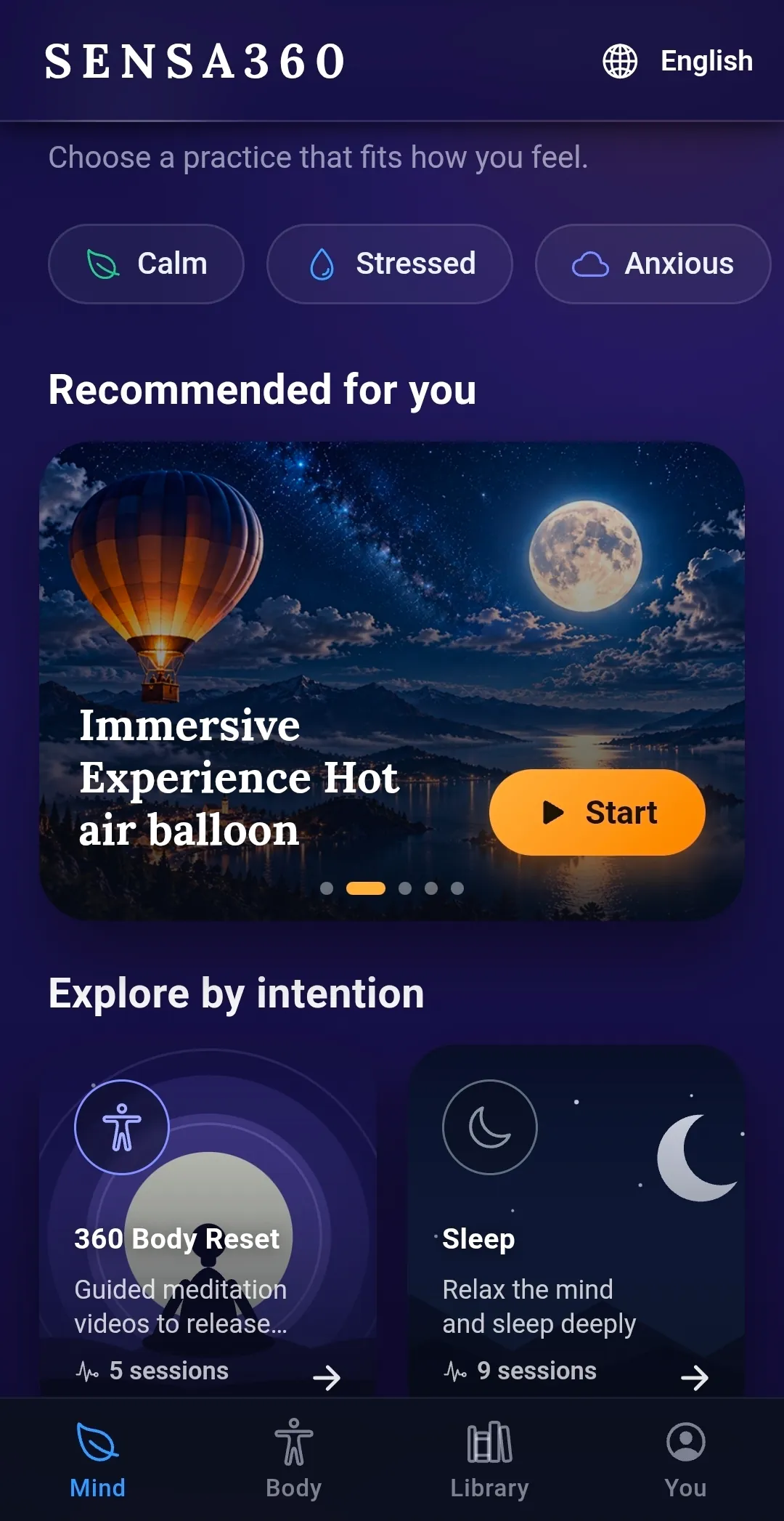
Finding it hard to sit still with your thoughts? Immersive meditation gives your senses somewhere peaceful to go, so anxiety has less room to take over.

Let anxious thoughts drift away in moonlit Venice
Glide along still water as each slow stroke of the oar guides a longer, calmer breath. Worries become ripples behind you, noticed and then gone.

Unwind the day's stress on the midnight train
The steady rhythm of the rails becomes your anchor as a guided body scan melts tension from your shoulders, jaw and chest, easing you toward deep, restful sleep.
A simple daily meditation routine for stress
You do not need an hour. Three small moments of calm, spread through your day, can change how you handle pressure.
-
1
Morning: 3 minutes
Before you check your phone, take a short mindfulness session to set a calm, clear tone for the day.
-
2
Midday: 1 minute
Feeling the pressure build? Pause for a round of box breathing or 5-4-3-2-1 grounding to reset your nervous system.
-
3
Evening: 10 minutes
Wind down with a body scan or an immersive sleep journey to release the day and drift into deeper sleep.
What regular meditation can give you
Every session is a small investment in a calmer nervous system. With Sensa360, a few guided minutes a day can add up to lasting change in how you think, feel and sleep.
- 😌Less stress & tension
- ☁️Fewer anxious thoughts
- 💓A steadier heart rate
- 😴Deeper, easier sleep
- 🎯Clearer focus
- 🌿Feeling back in control
Meditation for stress and anxiety: your questions answered
Does meditation really reduce stress and anxiety?
Yes, for many people. Research on mindfulness-based programmes, including a large 2014 review in JAMA Internal Medicine, found meaningful improvements in anxiety and psychological stress. Meditation works by activating the body's relaxation response, slowing the breath and heart rate, and training the mind to step back from anxious thoughts instead of getting caught in them.
How long should I meditate to reduce anxiety?
Start with 3 to 10 minutes a day. Consistency matters more than length: a short daily practice tends to help more than an occasional long session. Many people notice they feel calmer within a few weeks of regular practice.
What is the best meditation for stress and anxiety?
Slow breathing techniques such as box breathing or 4-7-8 breathing are great for fast relief in the moment. Body scan and mindfulness meditation help release built-up tension and reduce worry over time. Loving-kindness meditation softens self-criticism. The best technique is the one you enjoy enough to practise regularly.
Can meditation help during a panic attack?
Grounding exercises like the 5-4-3-2-1 technique and slow breathing with a long exhale can help many people feel more in control during intense anxiety. If you experience frequent panic attacks, please speak to a doctor or mental health professional.
Is meditation a replacement for therapy or medication?
No. Meditation is a helpful self-care practice that can complement professional treatment, but it is not a substitute for medical advice, therapy or prescribed medication. Always talk to a qualified professional about persistent anxiety or stress.
Can beginners use meditation for anxiety?
Absolutely. You do not need any experience. Guided meditation apps like Sensa360 walk you through every step with a calm voice, so you can simply press play, follow along and feel the difference.
Please note: This guide is for general wellbeing information only and is not medical advice. If stress or anxiety is affecting your daily life, or you are in crisis, please contact a doctor, a mental health professional or your local emergency services.