
Yoga app for beginners start your mind-body transition
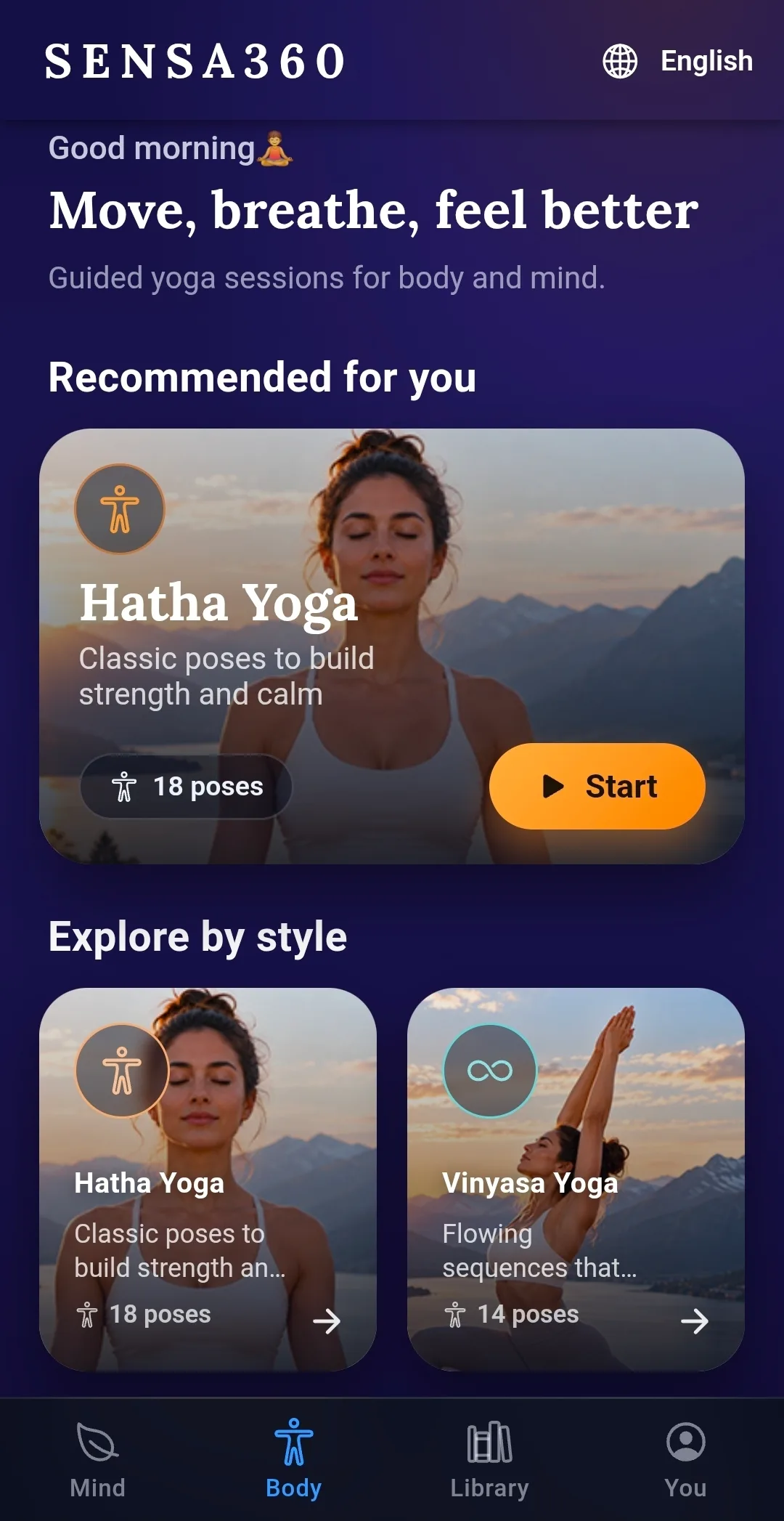
Never tried yoga, or not since school? Sensa360 is a guided yoga app that walks you through every pose, step by step. Follow Hatha and Vinyasa yoga sessions at home, build flexibility, strength and calm, and pair each practice with meditation and breathing in the same app.
- 🧘 Hatha & Vinyasa
- 🎯 Pose-by-pose
- 🏠 No studio needed
- ✨ Free to download
Yoga is where your mind and body meet
The word yoga comes from a Sanskrit root meaning to join or unite. Modern yoga does exactly that: it links movement, breath and attention so you feel calmer in your mind and stronger in your body.
-
1
Move
Gentle poses wake up stiff shoulders, hips and back, and teach your body what it feels like to be relaxed and strong at the same time.
-
2
Breathe
Slow, deep breathing sets the pace for every pose. It is the bridge between a busy mind and a settled body.
-
3
Be present
With attention on breath and movement, there is less room for worry. You finish feeling lighter, taller and more like yourself.
Hatha yoga vs Vinyasa yoga: which is right for you?
Sensa360 includes both. Start with the pace that suits you today and switch whenever you like.
Hatha yoga for beginners
Classic poses, held calmly with deep breaths. This is the best place to learn the basics, notice how your body feels and build calm.
- Slower pace with time to settle into each pose
- Great for learning alignment and body awareness
- Helps ease tension in the neck, back and hips
- A natural fit for evenings and winding down
Vinyasa yoga for beginners
Poses linked into flowing sequences, with each movement matched to an inhale or exhale. Energising, rhythmic and quietly absorbing.
- Movement and breath move together as one flow
- Builds strength, stamina and steady focus
- Warms the body from the inside out
- A great morning practice to start the day
New to yoga? Begin with Hatha for a week or two, then add a Vinyasa session when the poses feel familiar.
A guided yoga app that feels like a calm teacher
Pick a style, press start and follow along. Every session is built for a quiet space at home.
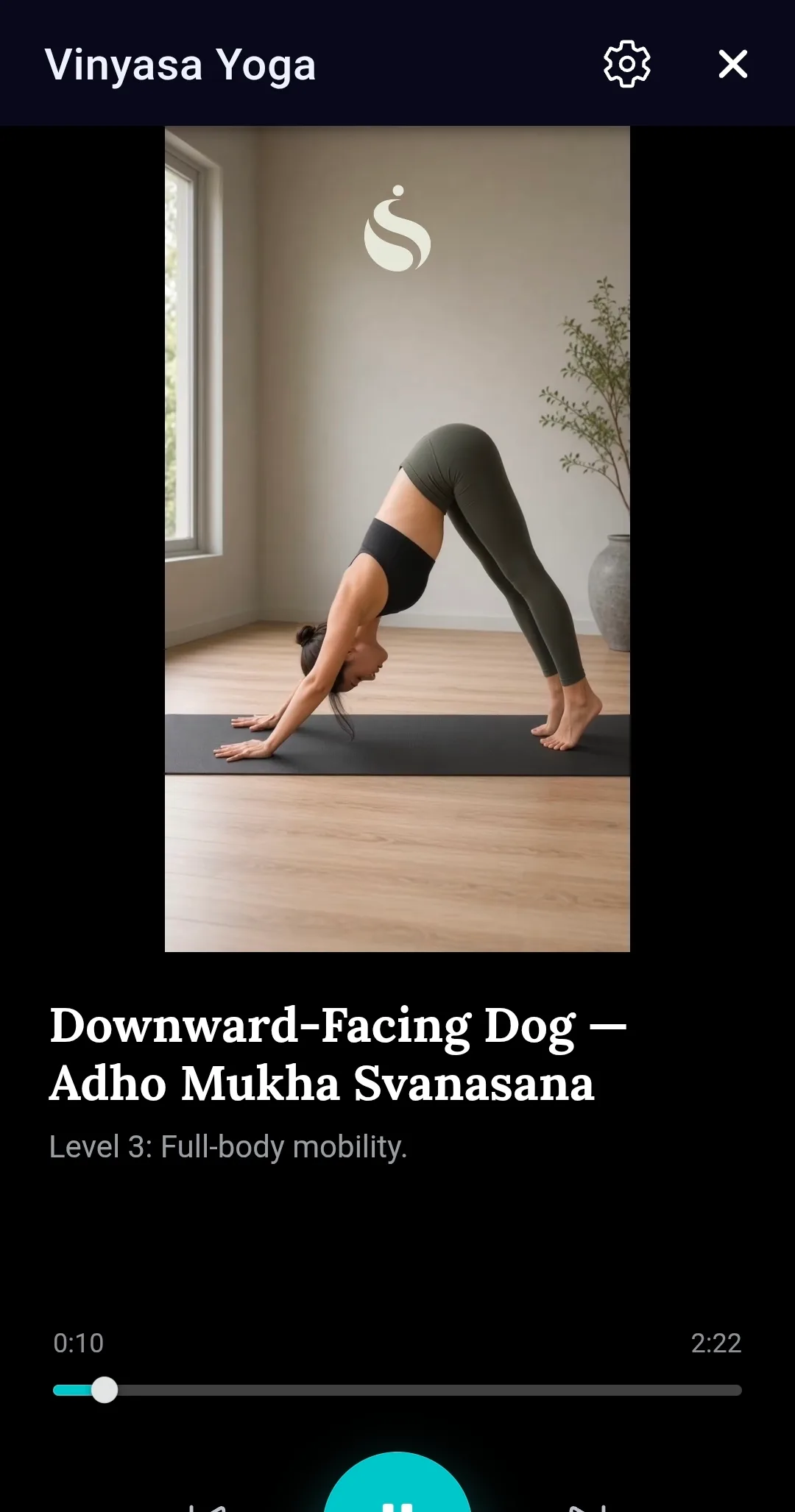
Pose-by-pose guidance
Each pose has its own guided screen, with a clear demonstration, a level and a progress bar, so you always know what comes next.
Practise anywhere
Living room, hotel room, garden or office floor. All you need is a little space, your phone and a few quiet minutes.
Yoga plus meditation
Finish a flow with a guided meditation for stress and anxiety, a body scan or an immersive sleep journey in the same app.
5 beginner yoga poses to know
Five foundations that show up again and again in Hatha and Vinyasa. Learn these and most classes will feel familiar.
Mountain Pose
Stand tall, feet grounded, shoulders soft. The starting point for every standing pose and a calm reset for body and mind.
Cat-Cow
Flow between an arched and a rounded spine with your breath. A gentle way to warm up the back and release stiff shoulders.
Downward-Facing Dog
An upside-down V that lengthens the spine and stretches hamstrings and calves while strengthening the arms and shoulders.
Warrior II
A wide, steady stance with arms reaching in both directions. It builds strong legs, stamina and a sense of confident focus.
Child's Pose
Kneel, fold forward and let your forehead rest. A restful pose to pause in at any time, whenever you need to catch your breath.
Tip: listen to your body. A good stretch feels like gentle release, never sharp pain. Use the pause button, shorten your range or rest in Child's Pose whenever you need to.
Pair movement with meditation: stand in Mountain Pose, then follow our root chakra meditation to feel grounded. After Cat-Cow and gentle hip circles, try the sacral chakra meditation to let your hips and emotions soften.
Find the yoga practice that fits how you feel
Choose what you want most right now and see where to begin.
Start with Hatha, finish with a body scan
Slow, held poses signal to your body that it is safe to unwind. Follow a Hatha Yoga session in the evening, then close with a guided body scan or a sleep meditation to settle your mind.
Start this practiceA simple 7-day yoga plan for beginners
One week, about 10–20 minutes a day, with rest built in. A suggested rhythm to help the habit stick.
- Day 1
Meet Hatha yoga
A first slow Hatha session. Learn how to breathe through each pose and where you feel tension. · 10 min
- Day 2
Open hips and shoulders
Another Hatha session. Notice how a pose feels a little easier than yesterday. · 15 min
- Day 3
Rest & breathe
No poses today. Try a short guided breathing exercise or a body scan meditation. · 5–10 min
- Day 4
Your first Vinyasa flow
Try a Vinyasa session and let each movement follow your breath. Go slowly and pause whenever you like. · 15 min
- Day 5
Build strength
Repeat Vinyasa and notice what feels stronger and steadier. · 15–20 min
- Day 6
Gentle Hatha & wind down
A slow Hatha session followed by a guided meditation for calm. · 20 min
- Day 7
Choose your favourite
Pick the style you enjoyed most and note how you feel: sleep, mood, stiffness. Then plan your next week. · 15–20 min
What regular yoga can give you
Research reviewed by the U.S. National Center for Complementary and Integrative Health suggests yoga may help relieve stress and support mental and emotional health, sleep and balance. Everyone's experience differs, but a few mindful minutes, repeated, add up.
- 😌Less stress & tension
- 🤸More flexibility
- 💪Stronger, steadier body
- 😴Easier, deeper sleep
- 🧘Better balance & posture
- 🌿A calmer, clearer mind
Yoga for beginners: your questions answered
Can I learn yoga at home with an app?
Yes. A guided yoga app lets you follow poses step by step at your own pace, pause whenever you need to and repeat sessions until they feel familiar. Sensa360 offers guided Hatha and Vinyasa yoga sessions with pose-by-pose guidance, so complete beginners can practise at home with no studio or experience needed.
Is Sensa360 a good yoga app for beginners?
Sensa360 is designed so beginners can start straight away. Hatha Yoga uses classic poses held slowly, which suits learning the basics, and Vinyasa Yoga links breath with flowing movement once you feel ready. You can pair either style with guided meditation and breathing exercises in the same app.
What is the difference between Hatha and Vinyasa yoga?
Hatha yoga is slower: you move into a pose, hold it and breathe, which makes it a good place to learn alignment and build calm. Vinyasa yoga is more dynamic: poses are linked in flowing sequences, with each movement matched to a breath, which tends to build heat, strength and focus.
How often should a beginner practise yoga?
Two to three short sessions a week is a realistic place to start, with 10 to 20 minutes each. Consistency matters more than length, and many people find a short regular practice easier to keep up than an occasional long one. Increase gradually as your body and routine allow.
Can yoga help with stress, sleep and flexibility?
Research summarised by the US National Center for Complementary and Integrative Health suggests yoga may help relieve stress and improve mental and emotional health, sleep and balance. Yoga also encourages gentle stretching, so many people notice improved flexibility with regular practice. Results vary, and yoga complements rather than replaces medical care.
Do I need a yoga mat or any equipment?
A mat is helpful for grip and comfort but not essential to begin. Wear clothes you can move in, find a quiet space about the size of a mat and keep a towel or cushion nearby. Props such as blocks or a strap can come later.
Is the Sensa360 yoga app free?
Sensa360 is free to download on Google Play and the App Store, with optional in-app purchases for extra content.
Is yoga safe for everyone?
Yoga is generally considered safe when practised sensibly, but it is not right for every body in every situation. Move within a comfortable range, never push into sharp pain, and speak to a doctor or physiotherapist first if you are pregnant, recovering from injury or surgery, or living with a health condition.
Please note: This page is for general wellbeing information only and is not medical advice. Check with a doctor or qualified professional before starting a new exercise routine, especially if you have an injury, a medical condition or are pregnant. Stop if a pose causes pain.